Working in a sustainable green environment is becoming important for warehouses across the world. It not only helps to keep the warehouse operations clean, but also reduces the operational cost by adopting green practices. Some 3PL businesses have started shifting their operations toward carbon-free processes, while others are still concerned about how to manage this without disrupting the efficiency of their core floor operations. Those who are using advanced 3PL warehouse software are finding more ease to adopt these processes, as the AI-powered WMS solutions are helping them to automate several operations without affecting order fulfillment or shipping.
Understanding the correct practices of carbon reporting is important, as it helps to appropriately report the measures you have taken to enhance the sustainability of the warehouse. Unfortunately, many businesses do not understand how it’s done, as they don’t use any WMS to get carbon reporting data. Due to this, they don’t work on any action plan that helps to reduce Greenhouse gas (GHG) emissions, which ultimately brings an impact on their reputation. Nowadays, even customers evaluate these factors, which is why keeping them in consideration is important for warehouse businesses.
In this article, we will understand how 3PL businesses can automate carbon reporting without affecting their warehouse operations, including order fulfillment. Let’s first understand what carbon reporting is and how it helps 3PL providers to move towards more sustainable warehouse operations.
Switch to WareGo and manage your stock effortlessly with intelligent automation.
Try WareGo NowTable of Contents
What is Carbon Reporting?
Carbon reporting is the process of collecting and publishing data that defines the carbon footprint of your business. This information helps you to take different measures that reduce the GHG emissions, allowing your warehouse to move towards sustainable operations. It also helps to enhance the reputation of your company, as carbon reporting lets the customers know about the environmental-friendly processes of your warehouse.
From the business point of view, reporting the carbon footprint is very important because it often attracts sustainability-focused customers and investors towards the warehouse. This helps to grow business rapidly, as people are keen to work with such 3PL providers that focus on maintaining a limited carbon footprint. It basically aligns with the evolving sustainability standards that not only strengthen brand reputation, but also allow warehouses to reduce their operational cost. That is how companies convert climate accountability into a strategic advantage, making their warehousing services lucrative for many green energy-focused customers.
How a WMS Helps to Streamline Carbon Reporting
The role of a warehouse management system in carbon reporting is very important, as it provides several automated features that help to reduce the carbon footprint of a warehouse. It is one of those solutions that not only automates different processes, but also makes sure to keep the order fulfillment running without facing any issues.
Considering that, those 3PL businesses that have deployed WMS into their system are getting the benefits of automation, as well as streamlined carbon reporting. It not only helps them to speed up different warehouse management processes, but also provides a correct analysis of various practices that are bringing sustainability in the operations.

1. Capture of Energy Usage
Warehouse management systems built for 3PLs are fully capable of controlling the facility’s environment as per the defined eco-friendly policies. It can adjust the lighting and temperature of specific places where picking and packing processes are regularly carried out by the warehouse staff. This helps to save a lot of energy during the off-peak hours when those areas are not in use. Similarly, if a warehouse is using robotic carriers to cut down human traveling, WMS solutions can track their energy usage and make appropriate adjustments to reduce the carbon footprint.
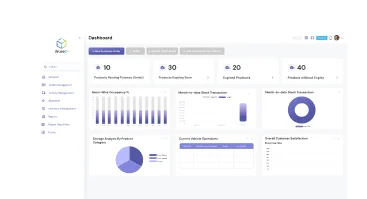
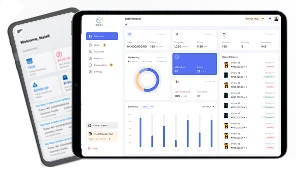
Cloud-based WMS systems are also connected with several warehouse equipment that automates picking and packing processes. The system records their energy during the live operations and then introduces several adjustments to make them more energy efficient. Meanwhile, the administrators can also see the detailed reports of energy consumption through WMS’s centralized dashboard, which allows them to make further adjustments as needed.
2. Carrier Emissions Calculation
Advanced 3PL software like WareGo can connect with the shipping carriers and logistics to calculate the carbon emissions. It is a process in which the WMS calculates how much energy will be consumed on each product shipment. From traveling distance to transportation mode, each and everything is calculated by the AI-algorithms, which then generates complete reports based on the available data. This helps administrators to make required adjustments if they need to bring more efficiency in reducing the shipment’s carbon footprint.
With the help of sustainable 3PL WMS, warehouse administrators get detailed reports to make quicker management decisions. This helps them to monitor the logs of emissions from every order, which basically gives an overview of the energy consumption by the entire shipment. That is how keeping track of carrier emissions becomes easy with a WMS, providing warehouse administrators with an adequate tool to streamline carbon reporting.
3. Real-Time Data Integration
Warehouse administrators can integrate real-time data from different sources to analyze the current carbon footprint of the company. From in-house operations to shipping carrier emissions, the reports about energy consumption in different domains get consolidated inside a single dashboard, allowing administrators to see where the carbon footprint is increasing and where it is becoming eco-friendly day by day.
A lot of times, warehouse businesses make mistakes in carbon reporting due to manual data collection. It is certainly not a recommended method because carbon reporting is an intricate process that needs detailed focus on every warehouse department. Utilizing a manual approach is therefore risky, as it increases the chances of errors. Working with a 3PL warehouse management software is therefore the way to go forward, as it provides automation in reporting and data integration without any errors.
4. AI-Optimized Packaging Volume Calculation
Modern 3PL management software like WareGo comes with built-in AI features for packaging volume calculation. It is a method through which a WMS automatically selects the smallest yet most suitable packaging for an order to reduce waste. All standard as well as custom packaging information is already stored in the WMS, which helps it choose the most appropriate packaging for every item in the warehouse.
Having the master data of all product dimensions, a WMS quickly proposes the most appropriate package whenever an item is added to an order. This automated process eliminates the chances of errors, as AI-powered algorithms finalize packaging after evaluating the stored data. That is how it not only improves on-demand packaging but also reduces waste to make the entire fulfillment process eco-friendly.
Streamlined Carbon Reporting Through Automated ESG Dashboards
Warehouse ESG (Environmental, Social, and Governance) dashboards provide administrators a centralized platform to monitor the carbon footprint data from different channels. It simplifies carbon reporting, allowing warehouse administrators to see detailed sustainability metrics of different departments across the facility. By correctly utilizing its data, businesses can efficiently navigate with their green energy practices to enhance sustainability in their core operations.

1. Continuous Data Aggregation
ESG dashboards have the ability to directly connect with different energy meters that power various warehouse departments. Besides that, they can also connect with operational IoT sensors and waste management systems to get a clear view of different types of energy consumption. By combining the data from these sources, ESG dashboards can generate simplified reports that give administrators a detailed view of a warehouse’s actual carbon emissions.
2. Audit-Ready Documentation
Analytics from ESG dashboards provide warehouse administrators complete peace of mind about carbon reporting. They provide a detailed audit trail, defining where the energy data originated, how it was validated, and then compiled in the report for final evaluation. By following this approach, warehouse administrators get automated audit reports that comply with major global sustainability regulations such as CSRD, ESRS, and more others.
3. Driving Growth Through Transparency
Warehouse administrators can get transparent carbon footprint reports through automated ESG dashboards that help to gain the trust of customers and investors. These reports are generated keeping in view all the sustainability compliance requirements, so that they can be shown to the clients to describe your warehouse’s eco-friendly management policies.
Final Words
Carbon reporting is becoming important for warehouse businesses, as it lets the market know about how sustainable their operations are. This helps to showcase that a warehouse is operating according to the global eco-friendly policies, keeping its carbon footprint as low as possible. By using a cloud based 3PL software like WareGo, businesses can automate carbon reporting without affecting their floor operations or slowing down fulfillment. This not only helps to gain the market trust, but also reduces operational costs, which increases their overall profit margin in the market.
Let WareGo bring order to your operations with powerful AI-based management.
Get Started with WareGoFrequently Asked Questions
- How can a Warehouse Management System (WMS) support a sustainable 3PL strategy?
Using a warehouse management system (WMS) helps to enhance sustainability in the warehouse operations. It provides plenty of features to maximize operational efficiency and minimize waste to keep the warehouse processes clean and green.
- What are the primary drivers for 3PLs to adopt sustainable fulfillment practices?
Third-party logistics providers (3PLs) can adopt sustainable fulfillment practices in a variety of ways. From carbon-neutral shipping to eco-friendly packaging, there are different drivers that help 3PLs to take their operations towards sustainability.
- What are some effective strategies for reducing a 3PL’s carbon footprint?
There are different strategies that can help 3PL providers to reduce their carbon footprint. Starting from optimizing transportation, they can make their logistics sustainable according to the evolving global standards. Similarly, utilizing eco-friendly packaging is another great way for them to reduce waste and lower shipping volume.
- How to reduce carbon footprint in 3PL logistics?
There are different ways with which businesses can reduce their carbon footprint in 3PL logistics. From electric vehicles to energy-efficient warehousing, 3PL businesses can adopt different practices to make their carbon footprint as low as possible. Ideally, using a warehouse management system for 3PL services works best in this regard, as it provides different features to optimize workflows and operational efficiency of a warehouse.