Cold storage management is necessary to keep perishable goods, such as food and medicine, in good condition. It reduces waste, prevents product degradation, and ensures compliance for temperature-sensitive items. A proven warehouse management software optimized for cold storage is central to streamlined operations.
This comprehensive guide will show you the various types of cold storage facilities, best practices, and management techniques to optimize cold storage operations.
Table of Contents
Key Takeaways
- Cold storage maintains freshness, minimizes expiry, and prolongs the shelf life of temperature-sensitive items like pharmaceuticals and food.
- Cold storage management makes use of temperature control, inventory management, and real-time monitoring systems to enhance product quality.
- Emerging cutting-edge technologies like IoT are quickly transforming cold storage operations by simplifying management, improving safety, and facilitating regulatory compliance.
What is a Cold Storage Warehouse?
Cold storage warehouses are the solution for extending the shelf life of sensitive products that need to be kept within a narrow temperature range for the highest quality. Food, beverages, agricultural produce, and pharmaceuticals must be kept at low temperatures to minimize degradation and spoilage.
Efficient cold storage operations are instrumental for ensuring that such products reach your customers in the best possible condition. Supply chain networks that require cold storage are often referred to as the cold chain.
There are two main categories of cold storage warehouses. These include:
- Refrigerated Cold Storage: maintaining cool temperature for products without freezing them.
- Frozen Storage: Keeps goods below the freezing point under 32°F.
Cold storage warehouses make extensive use of HVAC systems and insulation to keep inventory at low temperatures, thereby maintaining their integrity. Low temperatures are key to preventing decay, minimizing spoilage, and maintaining high freshness.
Thanks to cold storage facilities, all kinds of agricultural products are now available year-round, whereas, prior to the widespread use of cold storage, such products were only available during specific seasons. Also, meats and dairy products can be preserved for long time frames while still having the same great taste and freshness. In short, cold storage is central to the modern lifestyle since it ensures the year-round availability of all kinds of food products.
Our cold storage software has all you need for effective cold storage management
Let’s Talk!Industries that Depend on Cold Storage
A wide range of industries depend on cold storage for product freshness and integrity. These include pharmaceuticals, food processing, retail, and agriculture.
Pharmaceuticals are a prime example, since life-saving medicines and vaccines need to be kept at low temperatures within a narrow range to remain effective and viable when they reach end users. Strict regulations and compliance requirements exist in this regard that can only be met with efficient cold storage management.
The food processing industry needs cold storage to maintain high profitability and efficiency, as a significant portion of foodstock would otherwise go to waste without stringent temperature control. Hence, cold storage plays a key role in food safety, waste reduction, and compliance.
The increasing consumer preference for organic food and the continued rise of ecommerce means that cold storage will be increasingly important for the supply chain.
Cold Storage Warehouse Types

Different types of cold storage warehouses exist to fulfill specific requirements according to intended use, temperature settings, and ownership.
Private Cold Storage Facilities
Food processing businesses can operate privately-owned cold storage facilities next to their production sites. Such cold storage warehouses provide flexibility and high control, which enables streamlined operations and effective supply chain management.
Private cold storage is a key factor behind the exceptional product quality and high market share of major food processing brands like Kraft and Nestle.
Public Cold Storage Warehouses
Public cold storage warehouses are owned by third parties who offer cold storage services and inventory management for their clients. A key benefit here is that clients can maintain and manage temperature-sensitive inventory without heavy investments for cold storage. Public cold facilities can provide both long-term and short-term storage solutions for businesses that need to manage perishable goods.
Public cold storage facilities continue to see a rapid rise in the US and other parts of the world due to the complexities involved in running such facilities. For most businesses, the most cost-effective solution is to outsource cold storage to trusted specialists.
Refrigerated Warehouses
Refrigerated warehouses usually maintain indoor temperatures from 33°F to 55°F. This is enough to keep products cold without freezing. Such facilities work well for products that don’t need cooling down to the freezing point.
Ultra-Low Temperature Facilities
Ultra-low temperature facilities are needed for sensitive products that require very low temperatures, at times as low as 120°F.
Cold Storage Management
Efficient cold storage management depends heavily on components and equipment designed to reliably maintain low temperatures within a specified range. Maintaining this cold indoor environment within a narrow temperature range is necessary for high product quality – anything above or below the recommended temperature range adversely affects product quality and is therefore damaging.
Hence, real-time temperature monitoring is also required in addition to control, for maintaining the right temperature range.
Air quality control, especially humidity control, is essential for many cold storage products. Sufficient air circulation is necessary for preventing the buildup of excess moisture and mold, which, besides ruining product quality, is detrimental to consumer health and thus, a safety risk.
Heavy-duty insulation reduces heat transfer substantially, resulting in cost savings and stable indoor temperatures.
Backup power systems, such as generators, are needed to mitigate the risks posed by power outages. The presence of reliable backup power ensures that stored products will not spoil or lose quality in case of a power failure. Such systems prevent unexpected heavy losses to clients and are thus central to reliable cold storage operations.
Finding the Best Cold Storage Facility for Your Needs
To identify the right cold storage facility for your unique requirements, several factors need to be considered.
First, confirm that the facility has the necessary equipment to maintain the required temperature range of your products. For food safety, in particular, look for FSMA and HACCP certifications since they indicate a strong commitment in this regard.
Location is a key factor worth considering. The facility should ideally be located close to your end-users and production facilities since this reduces fuel consumption and the risk of temperature variation. Close proximity to transport services can lead to more timely shipments.
The storage capacity is critical as well. More storage space means the facility is better equipped to efficiently handle sudden spikes in demand. Also, look out for cold warehouse services like wrapping, shrinking, labeling, kitting, and palletizing to gain higher value.
While low service charges matter, they should not come at the expense of service quality. Cheap can turn out to be costly in the long run if the service quality is not up to par. So make sure that you partner with a trusted cold storage service provider with experience and satisfied clients. High responsiveness is essential so that timely action can be taken to prevent problems.
Cold Storage Challenges
Cold storage involves various challenges that can be resolved with good management. Here are certain key points:
- Operating within the required humidity and temperature range is important since significant variations can impact product quality and lead to spoilage.
- Temperature control for larger storage spaces can be more complex compared to smaller storage spaces.
- Energy costs need to be addressed, especially with larger storage spaces, since they incur higher energy bills and thus increase operational expenses.
Compliance requirements, labor costs, and operational disruptions lead to further cold storage problems. Compliance, for instance, represents an increased burden for workers and managers since it requires detailed records and documentation.
The facility should also prioritize worker safety, paying attention to accident prevention and safeguarding workers’ health against the harsh cold environment.
Cold Storage Best Practices
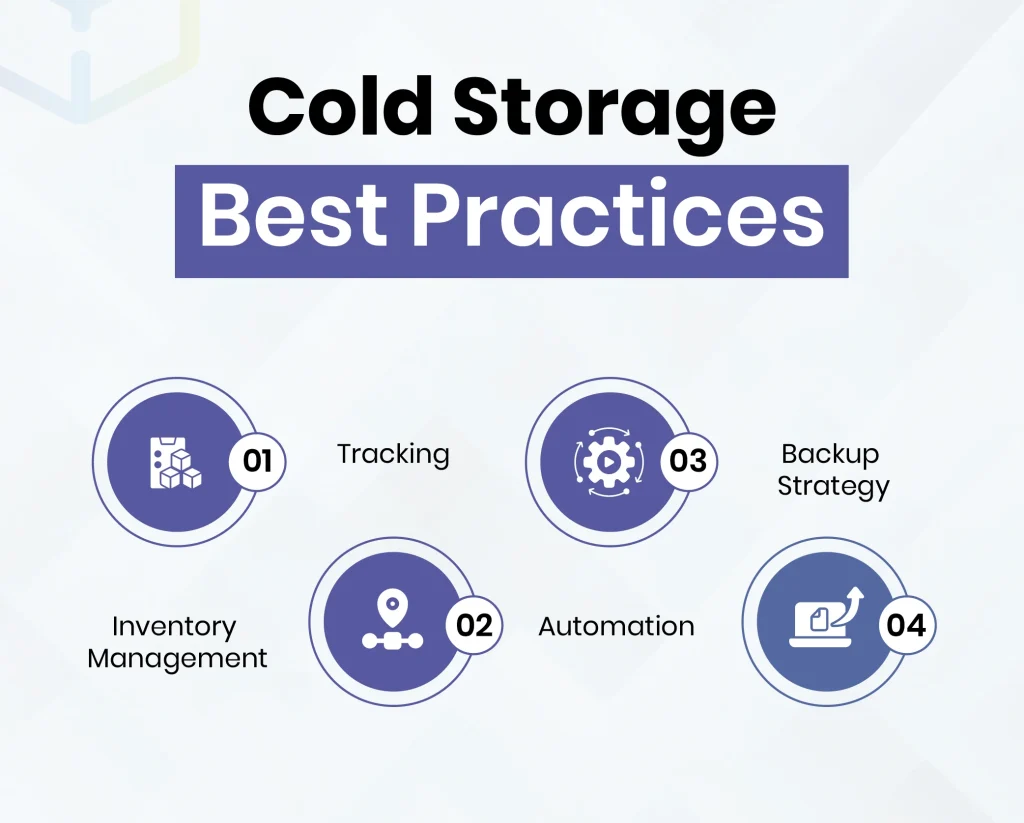
Here are the best practices to improve cold storage management.
- Inventory Management: Effective inventory management speeds up operations, reduces errors, and prevents waste, especially for temperature-sensitive goods.
- Tracking: Real-time inventory monitoring is critical to preventing overstocking, stockouts, and other inventory issues.
- Automation: Drives accuracy and efficiency, accelerating cold storage operations and minimizing human effort, errors, and delays.
- Backup Strategy: The team should work out and implement a strategy that includes preventive measures for minimizing disruptions to cold storage operations.
With these best practices in place, common cold storage inventory problems, disruptions, and bottlenecks can be minimized. The facility can then keep its cold inventory in the best condition.
Our next-gen software gives you the best tools for the job.
Talk to ExpertsHigh Tech Innovations for Cold Storage

Emerging technologies and high-tech innovations are promising to revolutionize cold storage processes.
- Robots: Can automate repetitive tasks, bringing efficiency, cost reduction, and less manual work. Automated guided vehicles or AGVs are a key development since they can work round the clock without pay to complete mundane tasks with speed and precision.
- AI and IoT: These advancements can be a game-changer for cold storage management since they can take real-time monitoring to the next level. For example, they can reduce compliance burden by automating several of their key processes, like automatically recording inventory movement, condition, and location. Not only will compliance become easier, but inventory management will also improve significantly.
- Vertical Storage: Cold storage facilities can be further optimized through vertical storage. That is, products can be stacked higher with the right infrastructure to significantly increase available storage volume.
In summary, implementing emerging technologies can streamline the supply chain, improve product quality, and increase the shelf life of perishable goods.
Cold Storage Safety Precautions
Warehouses are known for safety risks. But with cold storage, there are additional challenges to deal with besides common warehouse risks. Here is a list of safety best practices for cold storages to mitigate these risks.
- Well-insulated clothing is necessary for workers’ well-being in the harsh cold. Besides strong insulation, these garments should also offer high breathability. Gloves need good dexterity in addition to cold resistance.
- Socks should be made from insulating materials that don’t absorb moisture, like polypropylene.
- Regular breaks are necessary to mitigate cold-related health problems.
- Provide workers with extensive training so that they use equipment safely and skillfully. Pay special attention to safety protocols and standards during training. Both safety and productivity will improve as a result.
- Proper ventilation prevents the buildup of dust and mold, ensuring a healthier environment.
- Carry out regular inspections to be sure that all safety protocols are being followed, and that equipment is being used safely as intended.
The aforementioned pro-tips and best practices for safety can improve both worker well-being and productivity.
How Cold Storage Works for the Supply Chain
Cold storage has a vital role to play in effective supply chain management, since it boosts quality and maintains safety for critical products like pharmaceuticals and chemicals. It is also vital for food safety and waste reduction.
Thanks to effective cold storage, such delicate items can stay in good condition till they reach end users. Regulatory compliance for such items largely depends on streamlined cold storage.
Robust inventory management techniques like First Expired, First Out (FEFO) management, real-time tracking, and stock rotation are at the core of optimized cold storage. Demand planning and strong coordination with suppliers are also vital to this end.
Cold Storage Costs
Factoring in the different costs involved enables accurate ROI calculations for cold storage warehouses. Construction costs for cold warehouses can easily run into millions of dollars owing to various factors.
Your facility’s location plays a big role in overall costs. Land prices, labor costs, and utility rates strongly influence both investment size and running costs for the cold warehouse.
Compared to ordinary warehouses, temperature-controlled warehouses can easily cost 3 times as much to construct.
The specialized equipment for cold storage is a critical cost factor. Investing in quality equipment pays off despite the higher price tag since you can save more in the long term thanks to energy efficiency, reliability, and lower maintenance costs.
Likewise, automated systems can bring more financial and operational benefits in the long run despite heavy investment, since they boost productivity.
An optimized maintenance schedule is necessary for minimizing breakdowns, disruptions, and high subsequent costs.
Partnering with the Right Cold Storage Service
Outsourcing cold storage operations to the right experts can save you cost, time, and effort. Since the service already has the cold facility up and running, you don’t need to invest heavily in such a facility. By partnering with a reputable service provider, you can benefit from cold storage expertise and experience that your business may not have. Since the service provider handles both management and operations of the cold warehouse, you save plenty of time and effort. You are thus free to prioritize the growth of your business.
But before getting into it all, be sure to complete your due diligence. Investigate cold warehouse services for reputation and reliability. Take feedback from their clients to get a good idea of what to expect.
Before finalizing a cold storage partner, get a clear and complete cost estimate.
By outsourcing to a reliable warehouse service, not only will you benefit from high operational efficiency, but you will also be able to keep ahead of growing compliance requirements.
Energy-efficient and eco-friendly cold storage services can also support your branding by showing your commitment to sustainability.
Cold Storage – The Future
The continued evolution of energy-efficient technologies is reshaping cold storage by minimizing operational costs. Besides improving profit margins, this also boosts the brand image since customers prefer buying from environmentally friendly businesses.
Cold storage warehouses will grow in numbers since there is an increased demand for temperature-sensitive goods like food, beverages, pharmaceuticals, and chemicals. Fresh kitted meals, for instance, are seeing greater demand, thus increasing the need for reliable cold facilities.
In addition, AI and automation in particular look all set to revolutionize operational efficiency in cold warehouses. AI has high potential for efficient temperature monitoring, thereby improving reliability. Sophisticated automation hardware can handle repetitive tasks to reduce labor costs, manual effort, human errors, and delays. So, despite high upfront costs, automation hardware may prove to be a game-changer for productivity and cost reduction.
Hence, cold storage services should study emerging technologies to understand how they can step up their game with high-tech innovation.
WareGo – The Best Solution for Cold Storage
WareGo is a proven solution for cold storage facilities thanks to powerful enterprise-grade features shaped by real experience and results.
Here is why WareGo cold storage software stands out:
Temperature Control
Temperature monitoring and control keep your perishable stock in the best shape possible, minimizing spoilage and degradation.
FEFO Management
Built-in support for First Expired, First Out (FEFO) management minimizes expiry, maintaining peak freshness for your inventory.
Easier Compliance
Complying with regulations, including product recalls, is now within reach thanks to high traceability, audit trails, serialization, and lot tracking.
Alerts and Notifications
In case of temperature deviation or low stock, the system automatically issues alerts and notifications, allowing timely action.
Multilocation Management
Manage inventory across all locations with ease, and maintain high visibility over all inventory movement.
Real-Time Tracking
Fully updated, complete, and accurate inventory data allow you to take quick action, so that hidden issues don’t turn into major problems.
Automated Data Entry
Integrations, barcode scanning support, and omnichannel support automatically update inventory data for each inventory process and transaction. Minimizes manual data entry, human errors, and delays.
Smart Forecasts
AI-powered forecasts keep you ahead of seasonal demand, preventing overstocking and stockouts.
Inventory Management
ABC classification and real-time lot & batch tracking optimize inventory for faster warehouse operations.
Automated Stock Reordering
The system automatically triggers purchase orders when stock goes low, preventing stockouts.
Reports and Analytics
Stay fully informed about all warehouse operations and inventory movement with reports and analytics. Gain valuable insights that drive growth.
Labor Scheduling and Tracking
Optimized schedules for wave, batch, and zone picking improve productivity. Real-time KPIs allow you to track individual worker performance.
There are many more exciting features in WareGo, making it the top choice for cold warehouse management.
WareGo is the go-to software for smart cold storage brands.
Let’s Connect!Bottom Line
Cold storage management is essential for maintaining the product quality of temperature-sensitive goods like food, beverages, agricultural products, pharmaceuticals, and chemicals. Since it plays a key role in extending the shelf life of perishable goods, minimizing expiry, and cutting costs, it is a key element of supply chain management.
FAQs
How cold storage works?
Cold storage works by means of specialized HVAC (heating, ventilating, and air conditioning) equipment designed to maintain low temperatures within a narrow range. It must be pointed out that this equipment is not the same as domestic HVAC equipment – cold storage HVAC is heavy-duty equipment engineered for industrial use.
Temperature monitoring and control are absolutely vital for preserving the quality of temperature-sensitive stock like food, beverages, pharmaceuticals, chemicals, and so on. There may also be separate sections with different temperatures that cater to different types of inventory. For example, one section may be kept above the freezing point to preserve fruit, while another section may be kept below the freezing point to preserve meat.
What is Cold Storage Management?
Cold storage management is concerned with optimizing cold storage operations to cut costs, reduce waste, and ensure compliance.
How does cold storage management impact pharmaceuticals?
Cold storage management is crucial for maintaining quality, preserving integrity, and ensuring regulatory compliance for pharmaceutical products. Vaccines, in particular, require cool temperatures within a narrow range to stay viable. Even medications benefit from cold storage since it significantly improves their shelf life and effectiveness. This truly matters, especially for medications in short supply. Effective cold storage management enables manufacturers to meet compliance requirements issued by regulatory bodies.
Can cold storage WMS integrate with existing refrigeration equipment?
WareGo’s cold storage WMS can integrate with existing refrigeration equipment, allowing you to maintain stringent temperature control.
What happens if the WMS temperature monitoring system fails?
If WMS temperature monitoring systems fail, serious problems can arise, such as spoilage and waste of perishable inventory. There is also the risk of penalties for non-compliance.