Maintaining an accurate inventory in your retail store is highly important, because it gives you an overview of the available stock. A lot of times, retail businesses do not pay attention to this number and face multiple order cancellations from the customers. As a result, the trust in their store erodes, making their reputation in the market very shaky. Meanwhile, those who use specialized warehouse management software to maintain real-time inventory accuracy do not run into such issues, as they keep track of everything from the moment they enter into their warehouse.
Ecommerce businesses are specially advised to maintain accurate inventory levels all the time to facilitate customer orders effectively. They cannot afford to lose customers just because of having inaccuracies in the inventory, as that could prove detrimental for their existence in the market. They already work with different types of challenges to attract customers, so losing them just because of cancelled orders is certainly not acceptable for them.
In this article, we will take a detailed look at the importance of maintaining accuracy in inventory levels. We will discuss how businesses can use advanced retail WMS systems to do that which provides better accuracy in tracking and management of product stock levels in a warehouse.
WareGo gives you the advantage to automate inventory tracking effortlessly, so that your stock information always remains up to date.
Try WareGo TodayTable of Contents
Why Inventory Accuracy Matters?
Retail businesses need to have a sound knowledge of their actual inventories to drive sales in the market. This is the key principle for them to achieve sustainability in the market, because inaccurate stock information can prove detrimental for their business. They will fail to handle the customer orders effectively, as incomplete or wrong information often leads to cancelled orders. This is something no business wants, because it directly brings an impact on their market reputation.
Apart from that, the hit on sales and growth is the biggest concern why retail businesses cannot afford to work with inaccurate inventories. As per a recent research, businesses can face 62% loss in finances if their stock inventories are not up to date. These losses can arise from various problems, starting from picking errors to missed shipments and more others. It is basically a chain effect that gets multiplied at every stage to make business operations, as well as finances face continuous losses in the market.
For instance, if customers are coming to an online store to buy a limited edition watch, they would expect the product to be in stock within the given time period. However, due to wrong data input in the inventory, if the watch is shown as oversold on the product page, it quickly breaks the trust of the customers. It eventually forces them to leave the site and go towards other competitors that provide better updates. That is how inaccurate inventories affect a business, especially those who do not use any warehouse management system for luxury retail stock tracking.
Key Challenges in Luxury Inventory Management
Businesses working in the ecommerce sector often face various types of luxury retail fulfillment challenges. They usually encounter them due to not having any retail WMS that helps to streamline different critical tasks. If you do not know much about these challenges, as what they are and how they hinder growth, take a look at the detailed explanation given below.

Multi-Channel Complexity
Ecommerce businesses often struggle to synchronize the inventory data between physical boutiques, luxury flagship stores, and online marketplaces. Due to this issue, they fail to manage the customer orders which continuously come in from different channels. As a result, they face significant losses in the revenue that keeps them stagnant and hinders their growth in the market.
Without having any powerful warehouse management system for luxury retail, businesses cannot solve the problem of multi-channel synchronization with manual sheets or reporting. This practice won’t work until they realize the need to deploy a powerful inventory management solution like WareGo in their system. It allows them to streamline various warehouse management operations that result in better sales and inventory tracking across different channels.
High Sensitivity/Security
Managing the secured tracking of high-profile items without a WMS is a big challenge for retail businesses. It is a difficult task because several luxury items require strict tracking in a warehouse to maintain the security standards. Without having a retail WMS, it becomes very challenging because warehouse administrators are forced to do manual tracking that does not guarantee proper results.
Besides security, managing the sensitivity of various luxury items also becomes a cumbersome task in the absence of a WMS. It is often seen that some high-profile items in warehouses are required to be stored in different temperature-controlled environments. Without deploying a WMS, this is a challenging job because managing multiple storage conditions inside a single warehouse can often lead to wrong inventory placements.
Handling Returns
Ecommerce businesses regularly deal with product returns due to a variety of reasons. Managing these returns through an effective mechanism is important, because if left unchecked, the inventory restocking problem can evolve dramatically, creating pressure on the entire supply chain system. It is therefore advised to have a retail WMS in place, as that allows warehouse administrators to restock them in an appropriate manner.
Considering the luxury items, it is important to restock them with an ‘as-new’ tag to preserve their value. This needs several checks to meet the required standards, so a warehouse management system for luxury retail is needed to keep track of everything in a single dashboard.
Leveraging a WMS for Flawless Accuracy
Luxury retail businesses need to work with a cutting-edge WMS to simplify different types of tasks. It helps them to not just bring accuracy in inventory management, but also provides automated tracking of all stock levels across the warehouse.

Real-Time Tracking
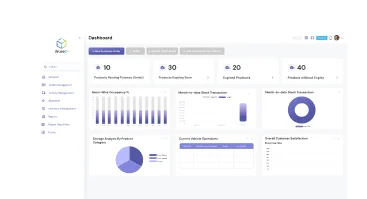
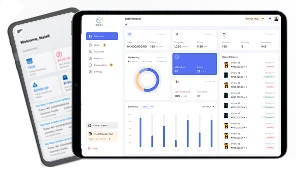
Real-time tracking through a warehouse management system for luxury retail brings huge transformation for ecommerce businesses. It is a feature that automates inventory management, allowing warehouse administrators to quickly track everything that moves in the facility. They get all the information from a single platform where tracking data of all stock inventories is automatically updated in real time.
By leveraging the benefits of RF scanning and IoT integration, retail WMS solutions provide real-time tracking of every product from the moment it arrives in the warehouse. This lets the administrators know about the status of all SKUs that are stored in the facility or shipped to any nearby fulfillment center.
Serialized Tracking & Lot Control
With serialized tracking and lot control, warehouse administrators gain in-depth visibility into the stock inventories. This is an important practice for those warehouses where luxury items are required to be tracked individually. By using an AI-powered retail WMS, administrators gain the ability to track products through Unique Identification Numbers (UINs) that provide better stock traceability. This not only simplifies tracking, but also the picking process that further expedites the shipping and delivery.
By scanning individual serial numbers, maintaining accuracy in inventories across the warehouse becomes easy for retail businesses. It eliminates incorrect information, providing administrators a clear view of what is available in the stock and what needs to be replenished.
Optimized Put-Away Logic
Optimized put-away logic is a specialized practice in which AI-powered retail WMS solutions direct warehouse staff towards the designated vault or storage for precise inventory management tasks. This works remarkably well in designating people towards specific areas where they need to store tagged products.
It should be noted that put-away processes require barcode or RFID scans to identify and store products at specific places. That is why the chances of making human errors in this process is very minimal, as every directive is given by the WMS that ensures real-time inventory accuracy.
How a WMS Powers Better Customer Experiences
Deploying a retail WMS in your warehouse will not only improve inventory tracking, but will also provide better customer satisfaction results. A lot of businesses do not understand this connection, so here are some points that describe how a WMS can provide better results in customer management.
Accurate ‘Available to Sell’ (ATS) Inventory
Ecommerce stores often showcase wrong stock information on the product pages due to broken connection with the warehouse inventory. This problem can be resolved by integrating a retail WMS that can accurately show only Available To Sell (ATS) inventory on the product pages. It lets the customers know about the actual product stock that is available to order, allowing them to make buying decisions correctly. This not only improves customer experience, but also ensures to eliminate the chances of order cancellations.
Omnichannel Fulfillment
Smart warehouse managers utilize cloud-based WMS systems like WareGo to fulfill orders quickly. It allows them to utilize local fulfillment centers to process orders, so that actual delivery time can be greatly expedited. By utilizing the power of omnichannel fulfillment, they get positive feedback from the customers which enhances the reputation of their store. It leads them towards more sales, as customers always like to come back to those stores where they get quick order delivery.
Final Words
Retail businesses that offer luxury items must need to use a Retail Warehouse Management System to keep their inventories secured and up to date. It is mandatory for them to synchronize the storefronts with backend warehouse inventories, as that gives them a clear view of the actual available stock. Based on this information, they can plan every sale, promotion or giveaway effectively without fearing about the order cancellations. In short, maintaining accuracy in inventory levels is vital for retail businesses as that helps them to facilitate customers quickly and drive more sales in the market.
Our WMS helps businesses to automate warehouse inventory management operations, so that they can handle multiple clients simultaneously.
Book a FREE Demo TodayFrequently Asked Questions
- How does a WMS prevent “ghost inventory” in luxury warehouses?
Ghost inventory refers to a stock of products that appear in digital records, but are not physically present in a warehouse. Fortunately, AI-powered WMS systems like WareGo eliminate the chances of showcasing ghost inventory, as it regularly maintains accurate records of all stock levels.
- Can a WMS help luxury brands manage seasonal peaks without compromising quality?
Advanced warehouse management systems help retail businesses to manage seasonal peaks by providing correct information about the inventory levels. Furthermore, their AI-powered forecasting tools offer on-demand reports that help stakeholders to keep their inventory stocks updated during the seasonal promotions.
- What role does RFID technology play in luxury inventory accuracy?
With RFID technology, warehouse administrators find more ease in inventory tracking. It provides real-time visibility and individual stock tracking that improves inventory accuracy to a greater level.
- What is the risk of using “Batch Updates” instead of Real-Time Data?
Batch updates are not a recommended method as compared to real-time data tracking because it often provides outdated inventory information. As a result, warehouse administrators do not get complete product information through it which then leads to various problems like stockouts, order cancellations and more.