Being a 3PL warehousing and logistics service provider, it is important for you to work with a system that can manage multiple client orders efficiently. It is one of those requirements that is essential for 3PL businesses, especially those that are new to the industry. By using an advanced 3PL Warehouse Management Software, they can simplify this job, as it provides a plethora of features that help administrators to manage in-house inventories and client orders effectively.
Nowadays, many 3PL-focused WMS are utilizing the power of artificial intelligence to bring automation in task management. Those businesses that are taking advantage of that are finding more ease to manage multiple clients simultaneously. They are not just improving their productivity through it, but are also enhancing their business revenue by working with different clients in the market.
In this article, we will discuss in detail about the warehouse management platform for third-party logistics providers, as how it performs and what type of features it offers to simplify inventory and logistics management. Let’s start from the basics understanding what a WMS for 3PLs is and why working with it is important for modern third-party logistics providers.
Try WareGo today and simplify your inventory processes using smart AI automation.
Get a Free DemoTable of Contents
What is a 3PL-focused WMS?
A 3PL-focused WMS is a system specifically built for third-party logistics and multi-client operations. It helps manage the receiving, storage, picking, packing, shipping, and returns of goods in the warehouse for multiple clients and brands. Unlike generic systems, a WMS built for logistics providers provides client-specific visibility and an event-driven billing engine to charge for storage, handling, picks, value-added services, and other similarly related tasks.
It should be noted that multi-client warehouse operations are complex, as each project has separate SLAs, routing rules, labeling, and charge models. A WMS that is purpose-built for 3PLs helps to manage all these processes from a single dashboard. This allows them to keep an eye on every client inventory properly, ensuring that all data related to stock ordering, shipping and others remain updated at all times.
Today, many 3PL-ready WMS platforms are built with the power of AI, which means they can automate different warehousing processes effortlessly. It brings a great advantage for administrators, as they become more proactive in managing multiple in-house processes by using smart AI functionalities. Using these systems is therefore becoming important for 3PL companies, as they provide automation in managing in-house processes, as well as multiple client projects effortlessly.
How Does a Third-Party Logistics WMS Work?
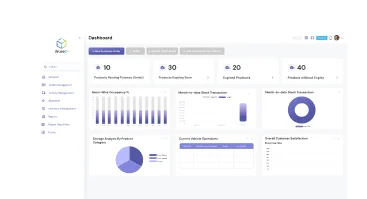
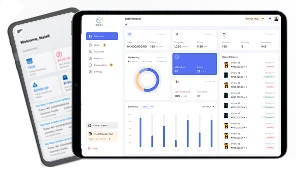
A 3PL software is a centralized digital system where administrators can see the status of multiple client inventories. It simplifies the management job by keeping all data in one place, so that administrators can make appropriate calls related to restocking, shipping and other processes effectively.
It maintains the real-time information of inventory, orders and shipping process of each client in an organized manner. Based on the requirements, it provides tailored workflows to manage each project differently, so that facilitating multiple clients simultaneously does not become a difficult job for administrators.
Every movement of a product in a warehouse triggers an event, letting the administrators know about the status of each stock in action. This helps to keep track of every inventory, allowing 3PLs to become more efficient in managing different clients.
To better understand how a 3PL software works, take a look at the functionalities with which it streamlines order management for every client.

-
Integrations & Data Model
A warehouse software for 3PL operators acts as a centralized tower that syncs orders, inventory, shipments, and invoices through different channels to create a unified record for each client. The purpose of this integration is to make sure that all client data is stored at one place, so that monitoring of every stock, shipment and other processes becomes completely streamlined.
The system then follows a precise data model to structure every information, so that duplication of information across various inventories can be avoided. This data model includes key information about every stock, including client name, location, unit of measure, product category and more others. By keeping all the records organized, it becomes easy for the WMS to relay this information across various locations, so that overselling and misallocation of products can be avoided.
-
Inbound & Putaway
Receiving starts with a planned shipment or purchase order. The inbound staff checks what arrived against what was planned, records the condition, and assigns a license plate to each handling unit. Discrepancies are logged without stopping the dock.
WMS issues directed putaway to send items to the right slot based on velocity, size/weight, temperature or hazard rules, and current capacity. Operators confirm goods movement on handhelds; each scan updates the warehouse map.
Automated putaway shortens dock-to-stock time, minimizes travel, and removes human decision debt from the aisle that ultimately gets businesses better traceability across the warehouse workflows.
-
Storage, Control, & Replenishment
After putaway, inventory is managed under rotation policies such as first-in-first-out or first-expire-first-out enforced by the inventory management software. Besides that, lots, serials, catch weight, and quarantine states are tracked at the license-plate level separately whenever needed.
Then it utilizes structured workflows to manage stock of different clients. Zones reflect environmental and handling constraints, while locations carry capacity and dimension attributes to prevent mis-stows. The software then schedules cycle counts by risk and value to prioritize high-velocity areas and keeps perpetual inventory aligned without shutting an aisle.
Talking about replenishment, the software also manages the restocking of products by taking cues from forecast reports. It helps the system to know about the in-demand items, as well as the customer niche that are most interested in them. By analyzing all data, the system automatically generates orders to restock specific products, so that the store never runs out of supplies.
-
Order Management & Outbound
It provides ease in all types of order management. It keeps track of the stock from the moment it enters the warehouse, giving administrators a full view about their each and every movement in the facility. By selecting the right picking and putaway methods, a WMS ensures to keep the travel time short, so that workers inside the warehouse can handle multiple orders quickly.
To ensure accuracy in picking, on-point Barcode scans help workers to verify every item easily. This reduces errors in picking, allowing administrators to keep the inventory information correct at all times. Due to this, order fulfillment becomes a lot easier, giving administrators a quicker way to ship products without any problems.
-
Returns & Disposition
The WMS treats returns as first-class work, not a side loop. Each return is identified against an order or authorization, inspected, and graded. Items suitable for resale are restocked with their condition and lot/serial intact; others are routed to refurbish, quarantine, or scrap with reasons captured for analytics. Those reasons matter.
If the data shows damage at a specific pack station, you fix packaging. If it shows frequent wrong-item picks on a family of SKUs, you adjust slotting or improve pick prompts. Clean returns workflows protect inventory accuracy and reduce write-offs.
-
Client Visibility & 3PL Billing
Every client gets a real-time view: receipts, on-hand inventory by location and status, open orders, exceptions, shipped orders with tracking, and financials tied to their contract. The billing engine converts operational events into charges with storage snapshots, handling, picks, packs, special projects, and value-added services attached for evidence.
Disputes drop when every fee links to a timestamp, a user, and a scan. Invoices export to the client’s financial system, and revenue recognition aligns to your accounting cadence. This is the core difference between a single-owner WMS and a 3PL platform: the same scans that keep operations accurate also guarantee you get paid for the work you performed.
A focused walkthrough of receiving, putaway, picking, packing, shipping, returns, and invoicing. Learn exactly how WareGo fits your operation.
Request WMS DemoKey Features of a WMS for 3PL
Built with new-age technologies, a 3PL-focused WMS comes up with different types of features to simplify inventory, order fulfillment and other processes. If you don’t know much about the features offered by a multi-client WMS, take a look at the list of functionalities given below.
Read More: Key Features in a 3PL WMS

-
Multi-Client Isolation
By using a warehouse management system for 3PL, you can handle multiple clients in one facility without crosstalk. The system scopes every record to a specific client and applies permission sets accordingly. You get clean audits, faster onboarding with reusable templates, and lower risk on SLAs and chargebacks.
This is one of those advantages that makes a 3PL management software an important management tool for third-party logistics. They get better efficiency in handling multiple clients from a single dashboard, which makes their job to manage different orders at one time a lot easier.
-
Inventory Precision & Control
Keep inventory accurate and auditable across your warehouse without doing anything manually. The software assigns a unique license plate to every handling unit, tracks lots, serials, status, and catch-weight where relevant, and enforces risk-based cycle counts. Accuracy goes up, shrinkage goes down, and available-to-promise stays reliable across channels.
By maintaining a close watch over the inventory, warehouse administrators remain updated about the available stock in the warehouse. This helps them to manage customer orders better, making sure to avoid stockouts and overselling.
-
Order Orchestration
With the help of a warehouse software for 3PL operators, you can ship products on time at the lowest feasible cost. The system allocates inventory by client, channel, and cutoff rules; chooses the right pick method for the order mix and balances workload across zones. By following this approach, it cuts down the excessive travel time, allowing warehouse workers to manage every order efficiently.
Taking the leverage of order orchestration, businesses can relay the updated stock information across different channels effortlessly. This is one of those advantages that makes order management easy, allowing businesses to facilitate every client from the most suitable fulfillment location.
-
Cartonization & Rate Optimization
The system calculates the right packaging from product dimensions and fragility, then selects a carrier service that meets the promise at the lowest landed cost and prints compliant labels and manifests. By following this approach, packing materials and freight spending tighten without manual decisions.
-
Client Portal & Self-Service
A warehouse management software gives every client real-time visibility and control over their stock. By using the dashboard, they can see receipts, on-hand by status, open orders, exceptions, shipped orders with tracking, and current invoices. The platform also helps clients to download documents and request projects without email chains, as that helps to reduce the load on support, while also improving the retention rate of customers.
By using a client portal, many customers can also lodge their returns without any hassle. It gives both administrators and clients a quick way to resolve returns issues in the shortest time possible. This precisely helps to elevate brand reputation, showcasing how responsible it is in managing client queries.
-
3PL Billing & Revenue Assurance
Managing 3PL billing can become a cumbersome process if you don’t have appropriate measures to record every invoice. It is one of those reasons why discrepancies often arise in the finances of a 3PL business. Fortunately, working with a 3PL operations management system simplifies this issue, as it allows businesses to capture and calculate invoices from different channels with ease.
By simplifying the billing process, businesses can ensure accuracy in their revenue, as all sales data is recorded in the system without any errors. It gives administrators a complete picture about the business finances, which helps them to plan different inbound and outbound processes perfectly.
Try WareGo today and handle your inventory with speed, accuracy, and ease.
Talk to Our Team-
Integrations Across ERP, eCommerce, & Transportation
Working with a 3PL management software helps you to keep systems in sync from order to cash. The WMS exchanges data with ERPs, online stores, marketplaces, retailer gateways, and carrier/TMS systems via APIs and webhooks. It handles retries, idempotency, and reconciliation, so that upstream and downstream counts match. Due to this, oversells drop, compliance improves, and exceptions are easier to resolve.
By integrating all streams inside one platform, managing client orders becomes a lot easier for 3PL business. They become proactive in handling sales spikes, which allows them to facilitate customers without any delays.
-
Reporting & Analytics
A WMS for 3PL helps you to operate on KPIs, not anecdotes. Real-time dashboards track inventory accuracy, dock-to-stock, pick productivity, order cycle time, chargebacks, and billing capture. Due to this, you get targeted improvements and a clear profitability view by client and site.
By getting on-demand reports, businesses become more agile in handling the stock across the warehouse. They get timely updates about depleting items, which helps them to replenish the stock to keep the sales channel running. That is how detailed analytics allow 3PLs to become proactive in managing the whole supply chain efficiently.
-
Security & Compliance
Managing security across the warehouse becomes an effortless job with a 3PL software, as it keeps track of every movement in the facility. By leveraging AI-powered technologies, the system provides complete visibility and control over every stock, so that administrators can monitor them continuously. It also offers role-based access controls to securely manage and protect sensitive inventory, so that the confidentiality of certain products can be protected.
Considering the above stated factors, a third-party logistics WMS helps businesses to stay compliant with standard security practices. This allows them to gain the attention of clients, as many of them usually like to work with those companies that ensure end-to-end security across the warehouse.
-
Automation-Ready
By taking the advantage of warehouse automation, 3PL businesses can scale without linear headcount. The system comes pre-built with various functionalities that helps to automate various in-house processes. Talking specifically about picking, it is undoubtedly one of the biggest labor pool in a warehouse, so automation here compounds savings and stabilizes throughput during peak sales seasons.
Working with a WMS for 3PL is therefore beneficial for every third-party logistics, because it provides automation in different domains of a warehouse. It not only enhances their productivity, but also allows them to scale their operations by taking the advantage of AI.
Let WareGo bring order to your operations with powerful AI-based management.
Try WareGo NowCommon Problems Businesses Face While Working Without A 3PL Management System
Businesses that handle large volumes of orders regularly need a 3PL warehouse software to perform efficiently. Without using this system, they can run into different types of problems that could affect the efficacy of their operations. Here are some of the common issues businesses face while trying to manage their warehouse without a warehouse system for third-party logistics.

Lack of Inventory Visibility
Working without a 3PL software can affect your visibility on the inventory of a warehouse. This is one of those problems that cannot be sorted out by manual counting, as the inventories inside a 3PL warehouse often become very complex. Therefore, it is recommended to manage them wisely by using a 3PL solution that provides real-time tracking of every stock with complete accuracy.
Slow Order Fulfillment
When administrators struggle to manage inventories, they start to face issues in fulfilling orders as well. Both of these problems are closely connected with each other, which is why businesses cannot ignore them. The incorrect stock information often becomes the key reason why the process of order fulfilment becomes slower. As a result, businesses struggle to ship orders on time, which directly impacts their reputation in the industry.
Incorrect Billing
Handling the billing process without a proper invoicing module is bound to create problems for businesses. They cannot rely on manual data entry to fill up the spreadsheets, as it will not help them to keep sales records with accuracy. Using a proper WMS is the only way to manage this process effectively, as it provides a dedicated billing module to generate invoices for every order.
High Error Rates
Many warehouses struggle to keep up the pace during peak sales seasons. They fail to manage the increasing volume of orders due to not having any centralized management system in place. As a result, chances of making mistakes in picking, packing and shipping orders increases dramatically, forcing businesses to often halt their operations for some time.
Benefits of Using 3PL-focused WMS
Working with a warehouse system built for third-party logistics brings plenty of benefits for third-party logistics providers. It not only automates critical management processes, but also helps to improve the productivity of a warehouse in different areas. Here are some points that define why working with a third-party logistics warehouse platform is beneficial for warehousing companies.

-
Higher Accuracy & Fewer Chargebacks
A warehouse management software for 3PL helps you to achieve accuracy in different domains of a warehouse. From inventory management to order fulfillment, the system allows you to handle every process with perfection, so that the chances of errors can be minimized.
By maintaining accuracy in inventory, you can experience lesser order cancellations. This usually happens due to the correct stock count, which gives customers a clear picture of what’s available on the shelf. Due to this, you received lesser chargebacks, as the majority of orders get completed without facing any issues.
-
Faster Cycle Times & Higher Throughput
Retail warehouses often face difficulties in picking and packing products when the order volumes are high. This problem can be sorted out by using a WMS that provides accurate data about every stock, which helps workers in cutting down the travel time and expedite the picking and packing process.
Working in a fast-paced environment then naturally helps businesses to increase their throughput. They become more sharp in handling multiple orders, which allows them to facilitate different clients simultaneously.
-
Captured Revenue & Cleaner Invoicing
A 3PL management solution simplifies the billing process, allowing administrators to record every sale and invoice with perfection. Event-driven billing closes gaps on storage, handling, and value-added services. Each fee links back to scans and timestamps, so invoices reconcile quickly and cash flow is more predictable.
Generally, 3PL management systems keep the invoicing process of every client separate. Although the core dashboard remains the same, segmentation is introduced for different clients to keep their financial records separate. This helps administrators to analyze every sales data individually, which given them a clear view of the performance of every project.
-
Lower Cost-to-Serve
When waves match the order mix and packaging is right-sized, you spend less on labor and materials. Travel reduction and verification at the source deliver outsized savings because picking consumes the most effort in most warehouses.
By using a third-party logistics WMS, businesses can save a lot on their operational cost, as the need for extra resources to manage in-house processes gets greatly minimized due to it. Smart stakeholders can then use that money in other areas to scale operations, taking their business footprint to new heights.
-
Better Client Experience
Clients always like to work with a system that allows them to monitor core attributes of their project in an effective manner. From inventory management to shipment tracking, it provides complete visibility, ensuring they remain updated at all times.
By getting a clear view of inventory, orders and other related stuff in real-time, the feedback of clients about the relevant 3PL services always becomes positive. This is why deploying a third-party logistics WMS becomes important for 3PLs, as it gives them an opportunity to engage clients in an effective manner.
3PL-Ready WMS vs. Traditional WMS/ERP Systems: A Quick Comparison of Efficiency & Accuracy
Many businesses remain confused on whether they should go for a generic ERP or a specialized 3PL-focused WMS to manage the operations of their warehouse. The best way to resolve this confusion is by analyzing the use cases for which they need a management system. Take a look at the below given comparison table to understand how advanced 3PL software outclasses other systems, providing more accuracy in managing different inbound and outbound processes.
| Dimension | Generic / Entry-Level WMS | ERP | Specialized 3PL Software |
| Operating model | Single owner, one rulebook | Financial system of record with basic inventory | Multi-client by design with isolated data and rules |
| Client billing | Usually manual or custom | Not built for event-based warehouse billing | Native event-driven billing for storage, handling, picks, & VAS |
| Client visibility | Internal screens and reports | Finance and planning view | Real-time client portal for inventory, orders, exceptions, & invoices |
| Retail & marketplace flows | Often add-ons | External connectors | Managed retail compliance & eCommerce connectors |
| Transportation | Basic label printing | Depends on add-ons | Integrated labels, manifests, rate selection, pickup close-out |
| Multi-site scale | Varies by tier | Financially multi-company | Network-aware multi-warehouse with shared templates |
| Automation hooks | Limited | Not core | Standard interfaces for WES/WCS, AMRs, & put-to-light |
| Admin & onboarding | Manual setup per brand | Formal change cycles | Templates for client onboarding, roles, and rate cards |
| Primary fit | One brand, simple rules | Accounting and planning backbone | 3rd-party logistics and brands outsourcing fulfillment |
Have integration questions. Ask live about ERP, eCommerce, retail compliance, and carrier setups. Get straight answers, not slides.
Chat with WareGoIndustries Powered by 3PL Warehouse Software
Businesses working in diverse industries are increasingly moving towards a WMS tailored to 3PL workflows to streamline their warehousing processes. From medical to ecommerce, companies in different sectors are transforming their supply chain, which is why working with a quality 3PL management tool is becoming essential for them.

-
eCommerce & Omnichannel Retail
Ecommerce businesses benefit a lot by working with a 3PL system. It helps them to synchronize live inventory data across all locations, which helps to fulfill customer orders without any confusion.
The system becomes especially beneficial in the peak sales seasons during which managing and routing multiple customer orders often becomes a difficult job for 3PL providers. It simplifies tracking and management of every inventory, allowing businesses to keep shipping and order deliveries on track.
-
Consumer Packaged Goods
Using a 3PL system allows businesses to become more agile that handle consumer packaged goods. It simplifies supply chain operations for them, so that they can manage large volumes of orders from different clients effortlessly.
It allows companies to scale efficiently by reducing overhead costs. It provides complete automation in managing different warehousing operations, so that businesses do not have to invest in physical resources and infrastructure.
-
Pharma & Healthcare
Businesses working in the pharma and healthcare industry need a solid WMS that can handle their inventory while ensuring compliance. A warehouse management system for 3PLs is useful in this regard because it not only keeps track of inventory, but also monitors the storage sites where stock is kept under precise conditions.
Many warehouse management systems are built to strictly follow healthcare regulatory compliance including FDA, HIPAA, and DSCSA. Working with them is therefore beneficial for businesses, because they provide complete peace of mind in managing the sensitive stock effectively.
-
Apparel & Footwear
Apparel and fashion accessories companies benefit a lot by working with an advanced apparel inventory management software like WareGo. It is a cutting-edge tool that provides real-time visibility of every stock available in different locations. This information helps businesses to facilitate customers quickly, making sure that every order gets delivered from the right fulfillment center.
It also helps them to take timely restocking decisions, so that order cancellations during the peak seasons can be avoided. These benefits demonstrate that deploying a WMS is hugely important for fashion and apparel companies, as it makes their warehouse management quite effortless.
-
Industrial & B2B Distribution
Companies working in the B2B distribution sector need an intuitive WMS that can handle both inbound and outbound processes effectively. A 3PL management system allows them to oversee the entire supply chain from a single dashboard, which helps them to stay updated with all inventory and shipment orders at all times.
By taking the advantage of a WMS, companies can easily manage their logistics to keep the order deliveries on track. It helps them to route shipments according to the evolving scenarios, so that orders from different clients can be fulfilled on time.
-
3PL Startups & Regional Providers
A specialized 3PL operations software also helps businesses to build solid communication lines with other 3PL providers. It acts as a control tower to connect your warehouse with other regional providers, so that live information about carrier networks and other processes can be shared. This helps to streamline the overall supply chain, which keeps shipping on track across the region.
How Much Does a WMS for 3PLs Cost?
The cost of a warehouse management system differs according to the features required by the clients. Besides that, licensing and implementation vary by user count, order volume, number of sites, integration scope, and automation. It is therefore recommended to know about all these things before making a decision, as these factors can help you to decide better.
Read More: 3PL Software Cost Explained
| Cost area | What’s included | Directional guidance |
| Platform license (cloud) | Base platform plus user and/or order tiers | Recurring subscription; scales with sites, users, and volume. Small teams start low; multi-site and advanced modules raise the monthly bill. |
| Perpetual/on-prem license | One-time license per site | Higher upfront; ongoing maintenance. Suits IT-controlled environments or strict data requirements. |
| Integrations | ERP, carts/marketplaces, retail exchanges, carriers/TMS | Packaged connectors reduce effort. Custom mappings, change management, and testing drive costs more than the connector itself. |
| Implementation & training | Discovery, configuration, test cycles, role-based training, pilot/hypercare | Ranges from a simple single-site rollout to multi-site programs with heavy data cleanup and automation. Scope decides the bracket. |
| Hardware & infrastructure | RF scanners, industrial printers, Wi-Fi survey, label stock, workstations | One-time with periodic replacement; rugged devices cost more but last longer under warehouse conditions. |
| Support & SLAs | Helpdesk, upgrades, uptime guarantees | Tiered by response time and coverage window. Higher tiers matter if you run around the clock. |
| Ongoing change | Enhancements and process updates | Budget a rolling percentage of license for continuous improvement and new client onboarding. |
Stand up a limited scope with real orders and measured KPIs. Prove accuracy, speed, and billing capture before broad rollout.
Start Pilot DemoChoosing the Right WMS For 3PL Services: Give Your Business the WareGo Edge
Choosing the right WMS to manage every client is very important for 3PL providers. Although there are many options currently available in the market, selecting the right one requires a focused approach. There are some specific factors that need to be considered before selecting a WMS, as the efficacy of 3PL services depends a lot on it.
As endorsed by many leading wholesale and ecommerce businesses, WareGo is one of the best WMS solutions available in the market that simplifies warehouse management for 3PLs. It provides real-time tracking of every inventory, so that you can maintain correct stock information all the time. Besides that, it automates various in-house warehouse processes with accuracy, giving you complete peace of mind in managing the end-to-end supply chain.
Final Words
That brings us to the end of this guide in which we have discussed about 3PL WMSin detail. It is a complete software that allows third-party logistics to streamline their business operations. From inventory tracking to order fulfillment, a 3PL inventory and warehouse software simplifies various critical processes to make warehouse management easy for administrators. Working with them is therefore becoming essential for businesses, as they provide automated solutions to manage multiple clients with speed and accuracy.
Bring your client mix, SLAs, and exceptions. We map use cases to configuration and show the path to measurable throughput gains using 3PL WMS.
Talk to a WMS ExpertFAQs
What is a third-party logistics WMS?
It’s software that runs multi-client warehousing end to end: receiving, storage, picking, packing, shipping, returns, client portals, and event-based billing. If you wonder what is 3PL warehouse system, think “execution plus billing” built for outsourced fulfillment, not single-brand operations.
How does a 3PL-focused WMS differ from a regular warehouse system?
A regular WMS suits one owner. A 3PL-focused WMS isolates clients, enforces client-specific rules, and turns activities into auditable charges.
What are the main features of a 3PL software?
Core capabilities include client isolation, license-plate tracking, SLA-aware allocation, wave and cluster picking, cartonization, rate optimization, client portals, and automated billing. A strong WMS for 3PL also offers robust APIs, retailer-compliant data exchanges, and carrier label and manifest generation.
Who needs a 3PL system?
3PL providers, brands outsourcing fulfillment, and omni-channel operations with retail compliance or heavy seasonality. If spreadsheets, chargebacks, or missed fees keep appearing, 3PL warehouse software centralizes execution, visibility, and billing so you scale without uncontrolled labor or revenue leakage.
What are the benefits of using a cloud-based WMS for third-party logistics?
Higher inventory accuracy, faster dock-to-stock, better pick productivity, fewer chargebacks, and captured revenue from storage, handling, and VAS. For 3rd party logistics, the payoff is lower cost-per-order, cleaner invoices, and happier clients with self-serve visibility.
How much does a WMS for 3PLs cost?
Budgets mix subscriptions or licenses, integrations, implementation, and devices. Model cost-per-order against gains in travel reduction, accuracy, and billing capture. When you assess the value of 3PL software, the ROI hinges on pick productivity and avoided chargebacks.
Which integrations matter most in a 3PL-focused WMS?
ERP sync for masters and financials, eCommerce and marketplace connectors for real-time orders, retailer-compliant exchanges for compliance, and carrier APIs for labels and manifests. Frictionless integrations turn the 3PL management system from a database into a live control layer across systems.
How long does WMS for 3PL implementation take, and what drives the timeline?
Single-site, light-integration projects can pilot in weeks; multi-site projects with retail compliance, automation, and complex billing take longer. Data hygiene, testing discipline, and change management decide speed. A well-scoped WMS for 3PL rolls out in phased waves to de-risk go-live.