Table of Contents
TL;DR
A 3PL operations software is a WMS system that allows third-party logistics providers to manage an organization’s warehouse operations, including inventory management, billing engine, distribution, and order fulfillment under a single roof. Deploying a powerful and clear supply chain strategy with your 3PL WMS software assists in eliminating weak spots, optimizing your workflows, reducing overhead costs, and leveraging high-growth market prospects.
This blog explains the success of third-party logistics solutions and the evolution of modern supply chain strategy in the first part. The next section goes on to explain the core pillars of a winning supply chain strategy for 3PLs and how 3PL software acts as a strategic engine. Lastly, key benefits of aligning supply chain strategy with 3PL-focused systems and key metrics to track for business success are mentioned.
Key Takeaways
- 3PL software offers not only basic tasks like tracking inventory, order execution, and monitoring shipments but also advanced features like automated workflows, billing, and predictive analytics.
- Aligning a powerful supply chain strategy with 3PL systems helps in revamping your entire business operations for better efficiency, productivity, and scalability.
- Core pillars for building a resilient logistics strategy are end-to-end visibility, scalability and flexibility, and multi-tenant architecture.
- 3PL software acts as a strategic engine by transforming data into predictive analytics, automating multi-node fulfillment, and strengthening client and vendor collaborations via portals.
- Through a strong strategy-system alliance, businesses can gain reduced costs, activity-based billing, minimized stockouts, expert access, enhanced client retention, and improved SLA compliance.
- Some of the KPIs you should track to measure business success are on-time in-full, perfect order rate, order fill rate, lead time, inventory turnover, and more.
Introduction
In today’s fast-paced digital landscape, even small businesses have shifted to online modes to reach a wider consumer base and keep up with modern shopping trends. The global logistics market was valued at around $9.4 trillion back in 2023 and is expected to grow even more to $14 trillion by 2028.
However, just like with any other advancements, there come unexpected challenges too hard to ignore. 3PL-focused software emerged, which helps businesses manage their supply chain operations in real time, overcoming unforeseen hurdles like pandemics, diplomatic tensions, and natural disasters.
The software allows you to not only fulfill basic tasks like tracking inventory, order execution, and monitoring shipments but also offers advanced features like automated workflows, billing, and predictive analytics that prevent any future bottlenecks.
WareGo strives to automate workflows and significantly reduce operational costs. Speak with our specialist to learn more.
Contact UsThe Evolution of Modern Supply Chain Strategy
Supply chain operations have gone through a breakthrough over the past decades. What began as a simple trade route for goods and materials has shifted into an AI-powered fulfillment network of automated workflows, real-time inventory visibility, reduced labor costs, and optimized distribution to multiple customers and locations.
As global marketplaces evolve, supply chains are expected to meet increasing consumer demands, support innovation, manage risks and geopolitical shifts, and deploy sustainable practices for long-term success.
At the same time, digital adoption comes with strategic planning of organized procurement, logistics, and execution to increase efficiency, reduce costs, and implement upgrades to keep growing. Planning lays a foundation upon which all succeeding activities depend.
Core Pillars of a Winning Supply Chain Strategy for 3PLs

Strategic pillars represent areas through which the organization will drive growth and gain competitive advantage to stay ahead in the market. Hence, the strength of your supply chain often leans heavily towards your 3PL operations software partner.
1. End-to-End Visibility
End-to-end visibility serves to provide transparency into the entire supply chain management. It allows the system to track every stage of logistics in real time, from the moment goods arrive, get verified, stored, packed, and distributed, along with the record of equipment and personnel dispatched.
2. Scalability & Flexibility
3PL software is strong, agile, and adaptable, allowing quick integration of advanced technologies and handling complex operations more swiftly and efficiently. Their flexible design also aids in quick adjustment, whether it’s a more cost-effective rerouting or handling a sudden spike in demand.
3. Multi-Tenant Architecture
A multi-tenant architecture allows seamless client segregation for easy operational execution. The system offers different client portals for third-party logistics providers to isolate products, procedures, invoices, and contracts of every client and manage them under a single roof for more efficiency and productivity.
Get access to advanced predictive analytics and leverage high-growth market opportunities easily with WareGo.
Sign Up NowHow 3PL Software Acts as a Strategic Engine
Third-party logistics software helps businesses transform from simple online marketplaces to data-driven strategic engines. This lets organizations evolve from simple order tracking to capturing high-growth market opportunities for hidden margins.
1- Transforming Data into Predictive Analytics
Access to real-time data allows organizations to automatically replenish inventory, optimize shipping routes, and schedule events to avoid disruptions. WMS software also provides AI-powered predictive analytics, which not only aid in identifying potential problems in your workflows but also build contingency plans and market foresight tools.
2- Automating Multi-Node Fulfillment
3PL-powered WMS software handles a number of strategically located warehouses and facilities from which their clients can seamlessly fulfill omnichannel execution. This reduces the dependency of businesses on one location and mitigates risks associated with localized disruptions while helping decrease shipping costs and avoid lost consignments.
3- Strengthening Vendor and Client Collaboration via Portals
Real-time supply chain data management not only keeps all the included parties involved in the step-by-step process but also strengthens vendor and client collaborations. This automated system will not only help in building a strong relationship but also resolve unforeseen circumstances, disruptions, and system upgrades in a timely manner.
Key Benefits of Aligning Your Strategy with a 3PL WMS

Strategy in supply chain management is as important as the 3PL-focused WMS itself. A well-designed strategy will aid in optimizing your already streamlined warehouse operations. Some key benefits that you gain from a good strategy over a WMS are:
- Reduced Overhead Costs: Deploying a third-party logistics provider converts your fixed capital expenses into automated workflows, greatly reducing labor costs and individual task fees.
- Activity-Based Billing: A 3PL WMS will automatically log and match every physical activity of your business with individual client contracts and pricing models for transparency.
- Minimized Stockouts: Real-time supply chain data management and visibility keep track of inventory across all facilities to prevent stockouts and maintain safety stock thresholds.
- Get Expert Access: 3PL service providers offer pre-optimized networks of cost-effective logistics experts, heavy technological infrastructure, and technical workflows.
- Enhanced Client Retention: These systems are designed to provide customized workflows, data transparency, and fulfillment accuracy while reducing errors and disruptions.
- Improved SLA Compliance: By offering real-time visibility and automated workflows, WMS systems reduce errors and rectify mistakes before an SLA deadline is breached.
Partner up with WareGo for advanced functionalities that will not only minimize operational bottlenecks but also provide higher yields.
Book a Demo8 Essential Supply Chain KPIs to Track in Your WMS
Tracking the right Key Performance Indicators (KPIs) will help you optimize your workflows, reduce extra costs, increase customer experience, and gain higher ROI.
- On-Time In-Full (OTIF): Monitors customer orders that are delivered on time.
- Perfect Order Rate: Measures customer orders that are delivered without any mistakes and have the correct products, quantity, documents, on time, and in good condition.
- Order Fill Rate: Tracks the amount of fulfilled customer orders with available inventory.
- Lead Time: This is the amount of time it takes to complete an order from start to finish.
- Inventory Turnover: This KPI tracks the number of times your inventory is completely sold and replenished over a given period of time.
- Order Cycle Time: Records the total time from the moment an order is received till its delivered to the customer.
- Dock-to-Stock Time: Monitors the total time from when incoming stock is received on the dock, inspected, put away, and then packed for delivery.
- Supplier On-Time Delivery Rate: This tracks the total percentage of on-time deliveries made by the supplier.
The Bottom Line
Aligning resilient supply chain management strategies with 3PL software is the backbone of successful businesses. With the help of 3PL providers, businesses can easily gain advanced technologies, best practices, strategically placed inventories, and expert personnel overseeing their logistics operations. They can also negotiate cost-effective services, eliminate system bottlenecks, and continuously upgrade their system to stay competitive in this market.
However, before deciding upon a 3PL WMS partner, you need to carefully define your needs, operational scale, scalability goals, and then shortlist options matching your requirements. Choose a partner with a good reputation like WareGo that offers:
- Full transparency into their processes
- Customized supply chain workflows
- No hidden fees or system defects
- Strong customer-vendor collaborations
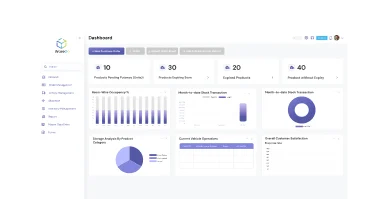
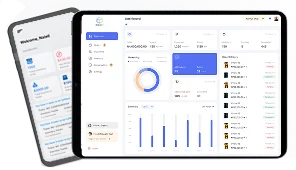
- Live client dashboards
We are a leading 3PL WMS software provider that is dedicated to identifying bottlenecks in your system and resolving them for better performance and efficiency while still giving ample room for growth with the latest technologies, best proven practices, and hyper-predictive intelligence.
Frequently Asked Questions (FAQs)
How does 3PL software improve supply chain management?
3PL software improves supply chain management by offering functionalities like real-time inventory visibility, automated workflows, optimized shipping routes, reduced costs and errors, and AI-powered predictive analytics for grabbing time-sensitive market opportunities.
What is the difference between a 3PL and 3PL software?
A third-party logistics (3PL) provider is a service provider that handles warehouse operations like receiving, documenting, packing, picking, and distributing. On the other hand, third-party logistics (3PL) software is a digital system that automates all these tasks.
How does 3PL software prevent overselling products on my website?
Third-party logistics (3PL) software is a system that directly links your online customer orders with physical stock in inventory, with real-time monitoring viewed by both business owners and logistics providers, which prevents overselling of products on your website.
What key performance indicators (KPIs) should I track using 3PL software?
Some of the KPIs that you should track to measure business performance are:
- On-Time In-Full (OTIF)
- Perfect Order Rate
- Order Fill Rate
- Lead Time
- Inventory Turnover
- Order Cycle Time
- Dock-to-Stock Time
- Supplier On-Time Delivery Rate
How does 3PL software help lower shipping costs?
3PL software assists in lowering shipping costs through automated workflows like real-time carrier tracking features that compare the most cost-effective and efficient shipping carriers, and smart routing features that ship orders through the fastest and smoothest routes.
Why is scalable 3PL software necessary for a growth strategy?
A business growth strategy has a contingency plan for sudden spikes in demand, new fulfillment channel needs, or new client onboarding. For this, scalable 3PL software is needed that offers access to advanced infrastructure, cutting-edge features, and advanced predictive intelligence.